

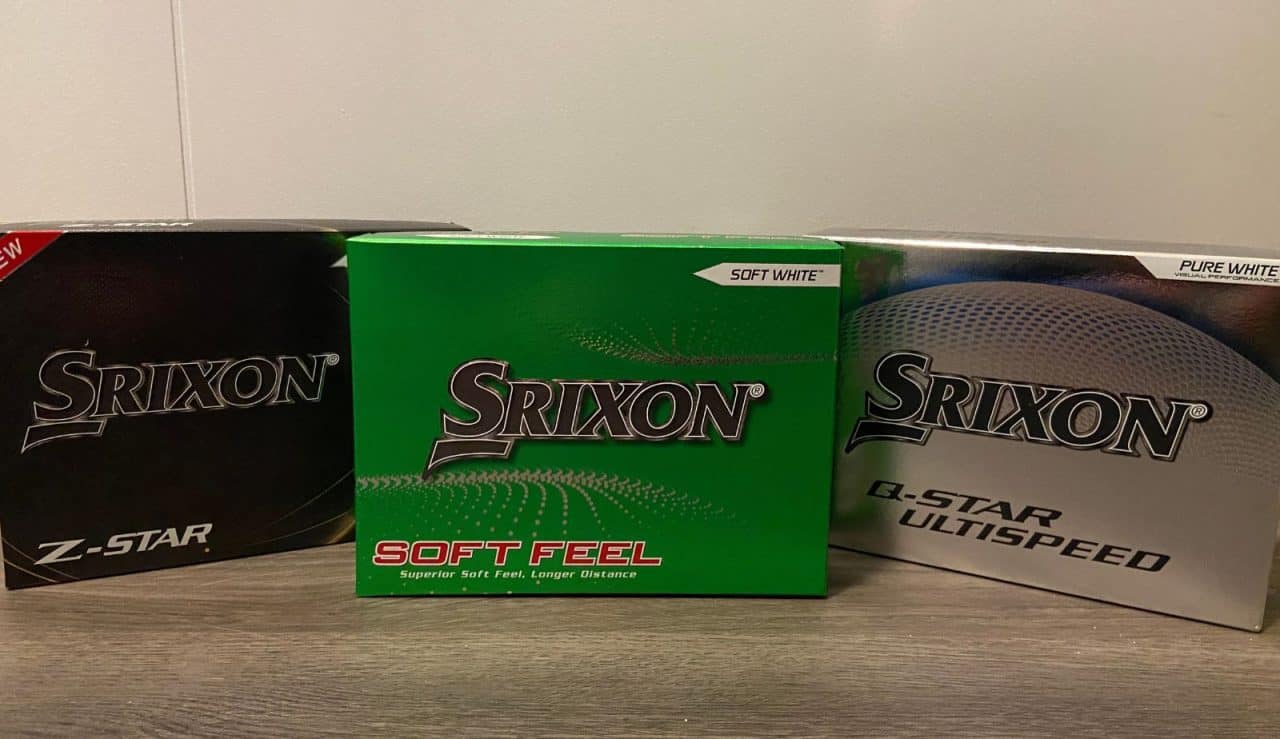
When it comes to buying golf balls, you could argue that Srixon is one of the brands that makes things pretty straightforward.
They do have a number of different models, which can make things a bit confusing. That said, the names they give their balls make it easy to narrow things down.
I’ve used every single one of their balls and have a pretty good idea of how they differ and who should use them.
This article is going to tie everything together to help you find the right Srixon ball. We’ll go over the differences, the benefits, the drawbacks, and which one you should use.
If you don’t want to read through everything, here is a quick takeaway on the best Srixon balls based on your skill level:

1. Srixon Soft Feel
The high handicap pick
Read More ↓

2. Srixon Q-Star Tour
The mid handicap pick
Read More ↓

3. Srixon Z-Star Diamond
The low handicap pick
Read More ↓
Each of the balls listed above are solid options for different golfers. The way I categorize handicap is:
- High handicap shoots 90+
- Mid handicap shoots 80’s
- Low handicap shoots 70’s
If that’s all you were looking for, great. If you want to know the differences and why a certain ball is recommended to a certain golfer, continue reading.
The Current State Of Srixon Golf Balls

Srixon is owned by a Japanese company that also owns Cleveland and XXIO. As of now, they’re the 3rd most popular ball brand you’d find on tour, behind Titleist and Callaway.
The Z-Star Diamond and XV are the 3rd and 5th most used ball on tour. This should be enough to convince you that they make a quality ball.
Here is the current list of Srixon balls that are available:
- Srixon Soft Feel
- Srixon Q-Star Ultispeed
- Srixon Q-Star Tour
- Srixon Z-Star
- Srixon Z-Star XV
- Srixon Z-Star Diamond
The Z-Star series is their high-end tour level balls. The Soft Feel is their entry-level ball. The Q-Star series is somewhere in the middle.
What’s important to note is that just because the Z-Star balls are more expensive and used on tour doesn’t mean they’re better for everyone. It’s probably the opposite.
Before we get into each ball and who it’s designed for, let’s quickly talk about how the balls are different and why some of them are more expensive.
Compression
If you look at a box of balls you might see a compression rating number. It’ll be anywhere from 30-110. Some brands list their ratings and some don’t. If it’s not on the box you can usually find it on their website.
We have an updated database on compression ratings, which you can see HERE.
Basically, compression is how much force it takes to fully compress the ball. A low number will be easier to compress. A high number will take more force (speed) to compress.
Most people are familar with the saying, soft balls are for slow swing speeds. As a general rule, that’s pretty accurate.
If you’re a high handicapper (shoot 90+) or you have a slower swing speed, a lower compression ball will probably be the better option. If you’re a better player and have a fast swing speed, something firmer will give you more distance.
With the Srixon lineup, the Soft Feel is the lowest compression option. The Z-Star series would all be considered “high compression” while the Q-Star is in the middle.
Cover
Golf balls will usually have one of two types of covers, urethane or ionomer. Cheaper balls will come with an ionomer cover. More expensive balls will come with a urethane cover.
Each of them has its pros and cons, so it’ll depend on what you’re looking for.
An ionomer cover is firmer and will spin less. A urethane cover is softer and will spin more. If you want a ball to spin off your wedges, urethane will be a lot better. That said, urethane will also spin more off the tee, which can cause problems.
With Srixon, the Soft Feel and Q-Star Ultispeed both have an ionomer cover. The other balls will all come with a urethane cover.
Learn more about the types of covers HERE.
Layers
A ball will have between 2 and 5 layers, which again, has its pros and cons. Cheaper balls will have a 2 piece design. More expensive balls will have a 3-5 piece design.
As a general rule, a ball with 3-5 layers will spin more than a 2 piece ball. More layers will also help control spin off the driver, especially with higher swing speeds. It can also help you get more height on your longer clubs.
That said, Srixon currently doesn’t have any 4 or 5 piece balls. The Soft Feel is a 2 piece ball while the rest are all 3 piece.
Srixon Golf Balls Comparison
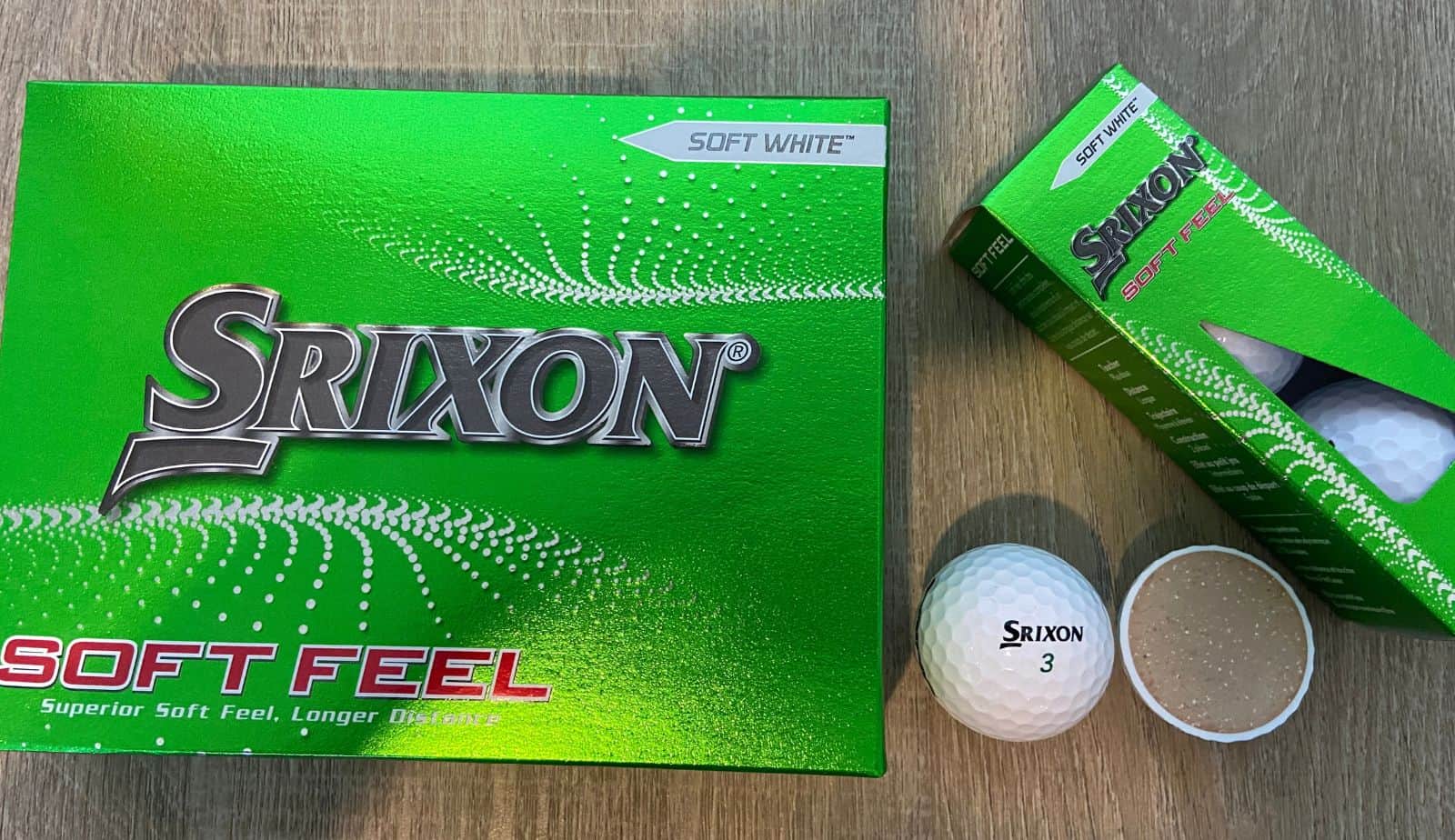
Srixon Soft Feel
| Srixon Soft Feel | |
|---|---|
| Handicap | High |
| Layers | 2 |
| Compression | 60 |
| Cover | Ionomer |
| Feel | Soft |
| Driver Spin | Low |
| Wedge Spin | Low |
These balls were my favorite for quite a while and are ideal for beginners, high handicaps, or anyone who doesn’t want to spend a fortune on golf balls.
They’re built with a 2 piece design and are the softest golf balls from Srixon. The compression rating is also the lowest (60), which makes them best for slower swing speeds.
Having a lower compression rating will help you get more distance with a slower swing speed. The opposite is usually true if you have an average to above average swing speed.
The biggest benefit to this ball is that it produces very little driver spin. The average golfer’s miss is usually to slice the ball two fairways over. That’s caused by sidespin.
Playing this ball won’t fix that, but it should reduce the spin more than any of the others. Straighter shots will lead to more distance and more fairways hit.
The main downside to this type of ball is that they don’t spin much around the green. This shouldn’t matter to the average player, but once you start getting better, you might want better short game performance.
Srixon Q-Star Series
| Srixon Q-Star Ultispeed | Srixon Q-Star Tour | |
|---|---|---|
| Handicap | Mid-High | Low-Mid |
| Layers | 3 | 3 |
| Compression | 85 | 75 |
| Cover | Ionomer | Urethane |
| Feel | Mid | Soft |
| Driver Spin | Low | Low-Mid |
| Wedge Spin | Low-Mid | Mid |
The Q-Star is Srixon’s middle-of-the-range ball that sits between the Soft Feel and Z-Star. The Ultispeed is built for distance. The Tour is built for all-around performance.
Both models have a 3 piece design. Everything else between them is different.
The Ultispeed has a higher compression rating (85), which should give it a bit more “pop” coming off the face. The Tour has a 75 compression rating, which will have a noticeably softer feel.
The Ultispeed comes with an ionomer cover, which is more durable, firmer feeling, and will spin less. This should also help the ball go a little straighter off the tee.
The Tour comes with a softer urethane cover, same as the Z-Star series. The benefit to this is that it’ll spin quite a bit more off the wedges.
As for which one to use, it’ll depend on what you’re looking for. My choice would be the Tour because I’m able to hit a decent amount of fairways and could benefit from the added spin around the green. If you’d prefer distance and straightness, the Ultispeed is the better option.
Srixon Z-Star Series
| Srixon Z-Star | Srixon Z-Star Diamond | Srixon Z-Star XV | |
|---|---|---|---|
| Handicap | Low | Low | Low |
| Layers | 3 | 3 | 3 |
| Compression | 88 | 100 | 102 |
| Cover | Urethane | Urethane | Urethane |
| Feel | Mid | Firm | Firm |
| Driver Spin | Mid | Mid-High | Mid |
| Wedge Spin | Higher | High | High |
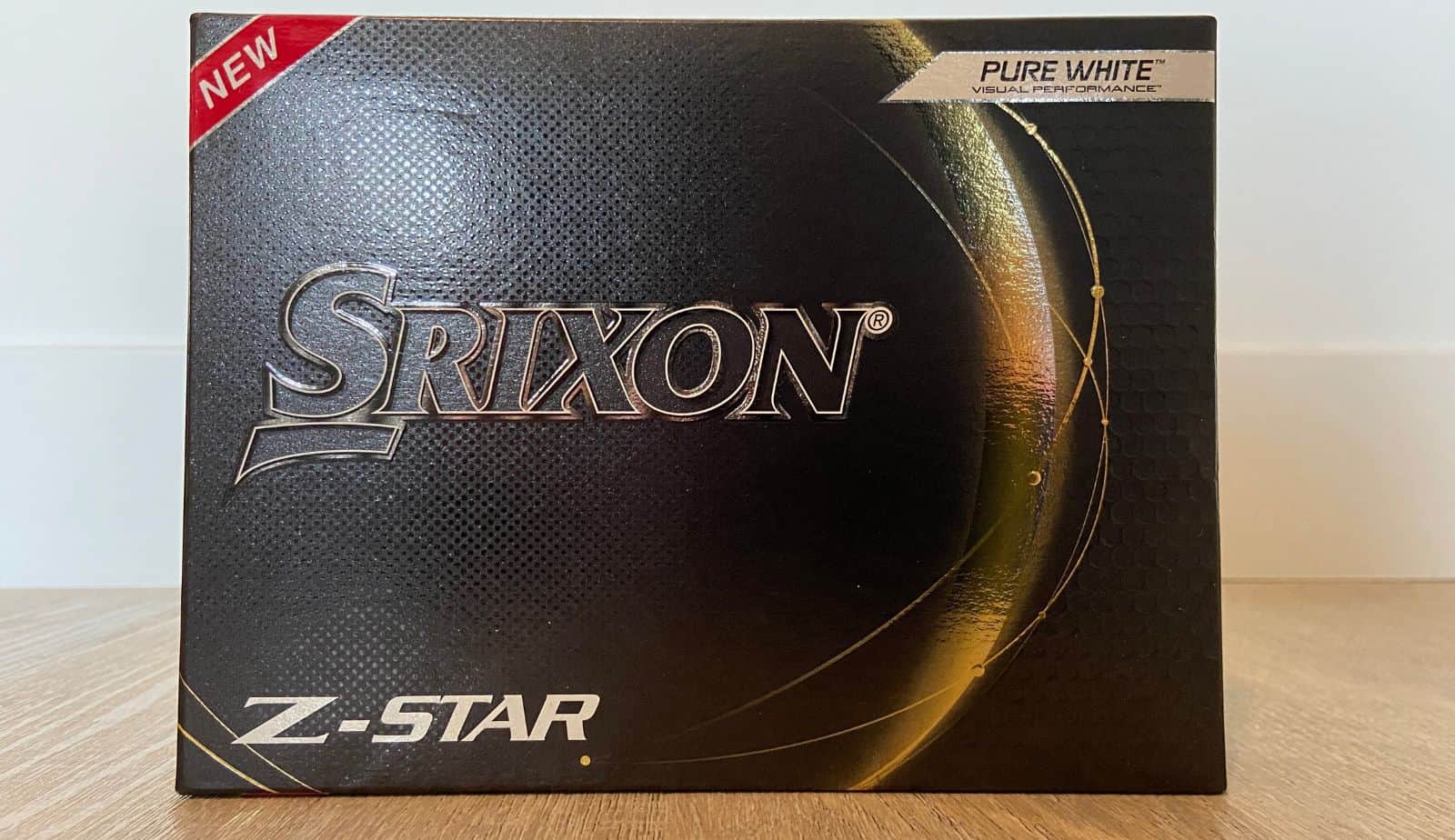
The Z-Star is Srixon’s tour ball and is one you’d want to consider once you get into low handicap territory. You could also use the Q-Star Tour if you want to save some money.
Note: I really wouldn’t recommend any of these balls for mid or high handicappers. The other models are cheaper and will most likely give you better results (aka forgiveness).
If you look on tour, the Diamond and XV are popular on the PGA Tour (#3 and #5 most used balls). On the LPGA Tour you’ll see the standard Z-Star in a lot of bags.
All of them have a 3 piece design and will give you low spin off the driver and high spin off the wedges. The easiest way to pick which one to play is based on feel. There are also slight differences if you need a little extra help.
The standard Z-Star has the lowest compression (88) and will be quite a bit softer than the others. Both the XV and Diamond have a compression rating around 100.
If you have a swing speed below 95 MPH (average), the XV and Diamond could feel too firm. If you’re not going to like that, the Z-Star will likely be for you.
The opposite is true if you have a fast swing speed (105+ MPH). The standard Z-Star could feel way too soft. This is all personal preference though.
Once you get past the feel, they have slight differences off the tee and around the green. If you want max spin off the wedges, the Z-Star could help you out. If you want max distance off the tee, the XV could be the way to go. The Diamond is somewhere in the middle.
Overall, you’ll see the Z-Star used on the LPGA Tour because the average swing speed there is 95 MPH (same as the average male golfer). If this is similar to you, I think you should use the same.
The swing speeds are faster on the PGA Tour, which is why they tend to use the XV or Diamond. If you swing the club 105+ MPH, you should probably use the same.
The one time I might think about using the standard Z-Star is for winter golf. If you play in cold weather, using a lower compression ball won’t feel as firm and could give you a bit more distance (I learned this one from Phil).
What Srixon Ball Should You Buy?
If you’re a fan of Srixon but don’t know which one to use, there are a few things you need to look at. The most important things are your current skill level and how much you want to spend.
A golfer just getting started should definitely not use the same ball as someone shooting in the 70s. These golfers need their balls to do different things, which is why Srixon makes different models.
As your ball starts to offer more features, the price will also increase. Beginners and high handicaps shouldn’t spend a whole lot of money on balls because they’ll lose a bunch. Once you get better, you can pay for better performance.
Other things to consider are your swing speed, spin rates, and feel. We’ll jump into everything you need to know, but generally, they make balls that fit into three categories: low, mid, and high handicap.
1. The high handicap pick: Srixon Soft Feel

The best entry-level ball from Srixon is the best-selling Soft Feel. In my experience, this is the best option for beginners and anyone shooting above 90 (aka high handicap).
When you’re first getting started, you’re going to lose a lot of balls. That’s why one of the most important factors to look for is the price. These balls are much cheaper than any of the other models.
For high handicaps, one of the best ways to lower scores is to hit more fairways and greens. The Soft Feel ball won’t spin much, which will help hit straighter shots.
The downside is that you won’t get much spin around the greens. That being said, the average golfer isn’t able to spin any type of ball anyway.
For senior golfers, one of the things you might struggle with is a decreasing swing speed. You might not swing the club as fast as you used to, which means you probably don’t hit the ball as high or as far as before.
The Soft Feel ball is designed to fly high and fly far for golfers with slower swing speeds. This also makes them a good choice for female golfers.
Even as a mid handicap with a slightly above average swing speed, I still really like these balls. Golf is so much easier when you’re hitting your second shot from the fairway. The only downside is the short game spin.
Srixon Soft Feel
Check Amazon PriceOur ReviewWe earn a commission if you click this link and make a purchase, at no additional cost to you. This does not impact our review.

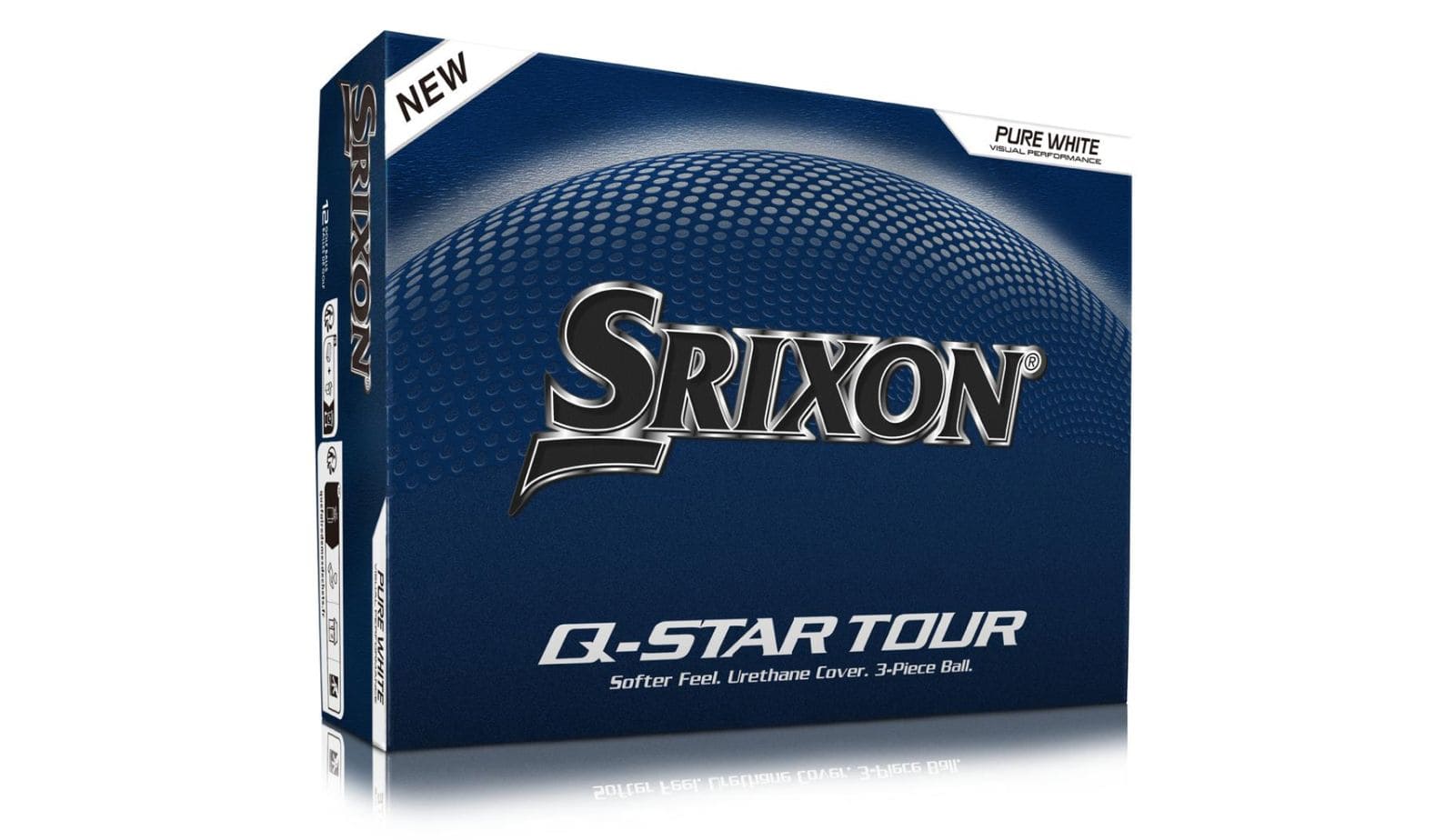
2. The mid handicap pick: Srixon Q-Star Tour

Once you’re able to consistently shoot in the 80’s (mid handicap), it might be worth paying a bit more to upgrade your ball.
The Q-Star series is Srixon’s mid-tier ball that sits between the Soft Feel and Z-Star. It offers better short-game performance than the Soft Feel. It also doesn’t cost as much as the Z-Star.
The reason these balls are suited for mid-handicaps is that you probably don’t need as much forgiveness as you did before. Your game would benefit from more spin.
More spin will help you control the ball better. You probably want to start working on your short-game spin; having the ball land on the green, bounce a few times, and then stop.
As for which model to use, I think most people would prefer the Tour. In my experience, the Ultispeed is the Soft Feel with a bit more distance. The Tour is a really good ball that will help your game get to the next level.
Compared to the Soft Feel, the Tour won’t go quite as straight but will perform much better off the wedges. Compared to the Z-Star, the Tour will be a bit more forgiving, won’t spin quite as much, and comes with a much cheaper price tag.
The Tour is a great mix of performance and value. As a mid handicapper myself, I’d use the Tour all day long (even as I get better). My mishits are more forgiving compared to the Z-Star and I still get pretty solid performance around the green.
Srixon Q-Star Tour
Check Amazon PriceWe earn a commission if you click this link and make a purchase, at no additional cost to you. This does not impact our review.
3. The low handicap pick: Srixon Z-Star Diamond
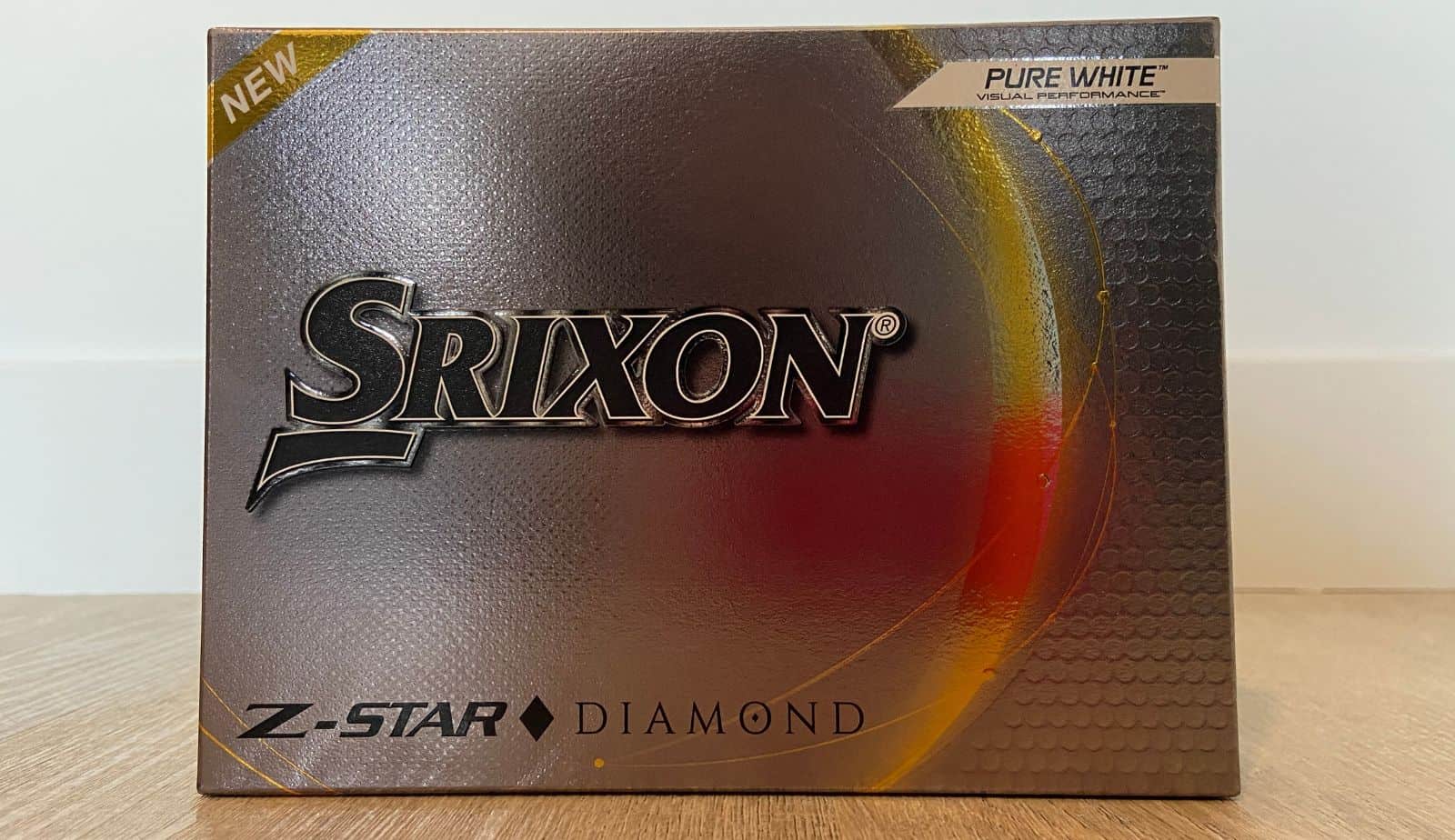
Price and value aside, the best overall ball fom Srixon is the Z-Star Diamond. When you look at distance and spin, it’s got the best balance of both.
I’d start looking at this type of ball when you can consistently shoot in the 70’s. If you’re not quite there yet, the Q-Star Tour is probably still the better bet.
The reason these balls are suited for low handicaps is that the compression rating is higher and they spin more. Since this is the case, they’ll be quite a bit more expensive than the others.
A higher compression rating will give you the most distance when your swing speed gets high enough. Anything above 95 MPH with the driver is when you might notice a difference in distance.
A higher spin rate will help you control the ball better around the course. More spin lets you control the shape and trajectory of your shot and will also help you stop the ball quickly on the green.
Since there are 3 models to pick from, it can be a bit confusing. It’s not a complete science on which one will perform better for you, but I’ll share my experience.
If you have a slower swing speed, the Diamond and XV might feel way too firm. I’d recommend using the standard Z-Star if that’s the case (or you prefer a soft ball).
If you have a faster swing speed, I got the best results with the Diamond. I had slightly more spin with the Diamond, which helped a bit around the green, but more importantly, I hit it a bit straighter.
Srixon Z-Star Diamond
Check Amazon PriceWe earn a commission if you click this link and make a purchase, at no additional cost to you. This does not impact our review.
Conclusion
Hopefully you now have a better understanding of all the different Srixon balls. More importantly, hopefully you have a better idea of which model to play.
I’ve used all of them, for quite a while. The results I got won’t be the same for everyone, but I tried my best to point out the pros and cons.
The main takeaway I want to give you is that you DO NOT need to spend a fortune on balls. 90% of recreational golfers will save money and most likely get better results not using a tour ball.
If you have any questions that weren’t talked about in the article or you’d just like to share your experience, make sure to leave a comment below.
And if you want to learn more about other brands, check out one of these guides: