

Callaway is the 2nd most used ball on tour, used by Jon Rahm, Xander Schauffele, and Sam Burns. So clearly, they make a solid product.
They do have quite a few models, but they at least give them names that make it easier to tell the difference (tour, soft, fast, etc).
I’ve used the Chrome Soft and Supersoft balls since they first came out in 2014/2015, which I’ve always been a fan of. That said, I’m not a fan of everything they’ve put out.
In this article, I’ll tie everything together to help you find the right Callaway ball. We’ll go over the differences, the benefits, the drawbacks, and which one you should use.
If you don’t want to read through everything, here is a quick takeaway on the best Callaway balls based on your skill level:
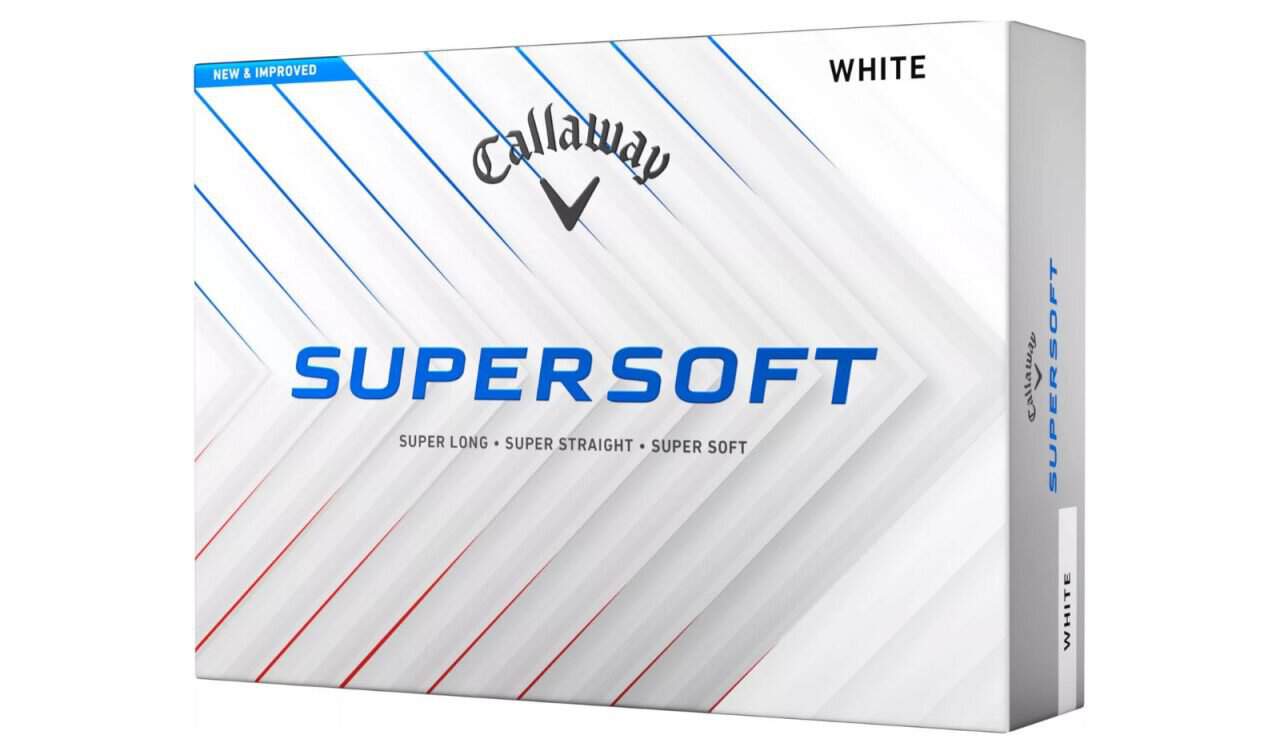
1. Callaway Supersoft
The high handicap pick
Read More ↓
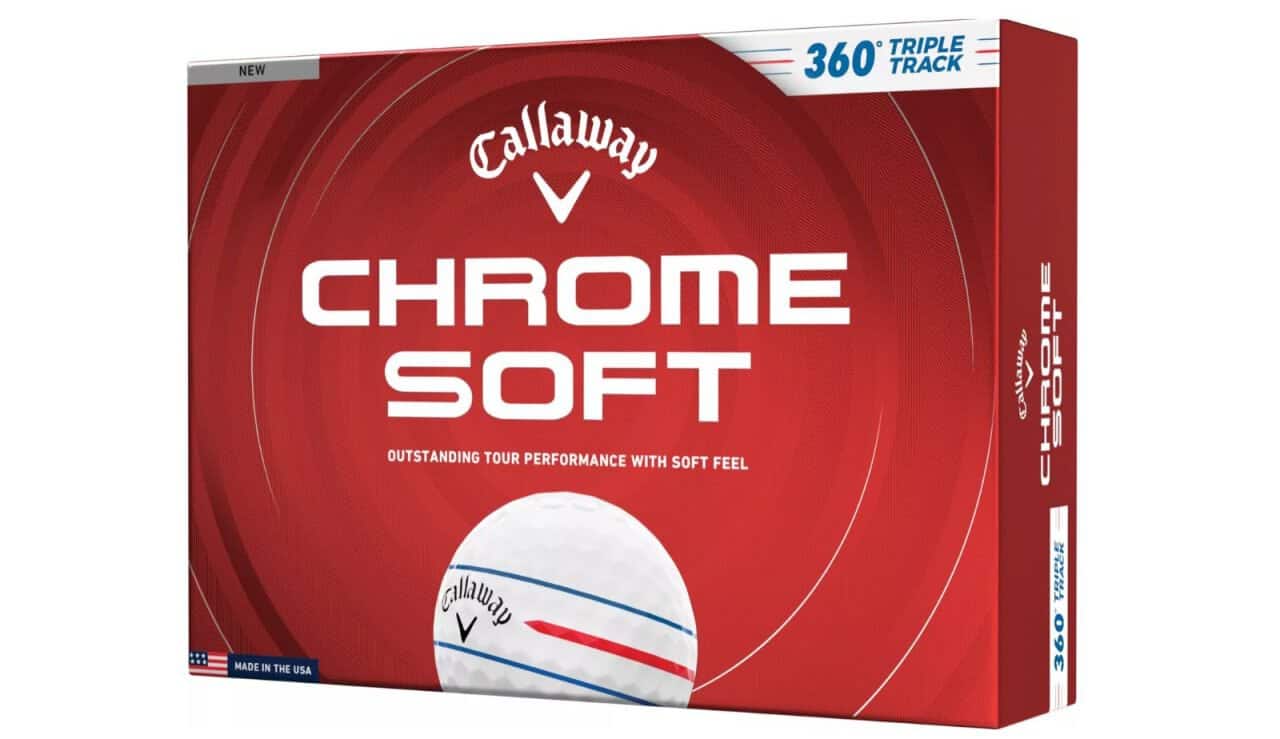
2. Callaway Chrome Soft
The mid handicap pick
Read More ↓
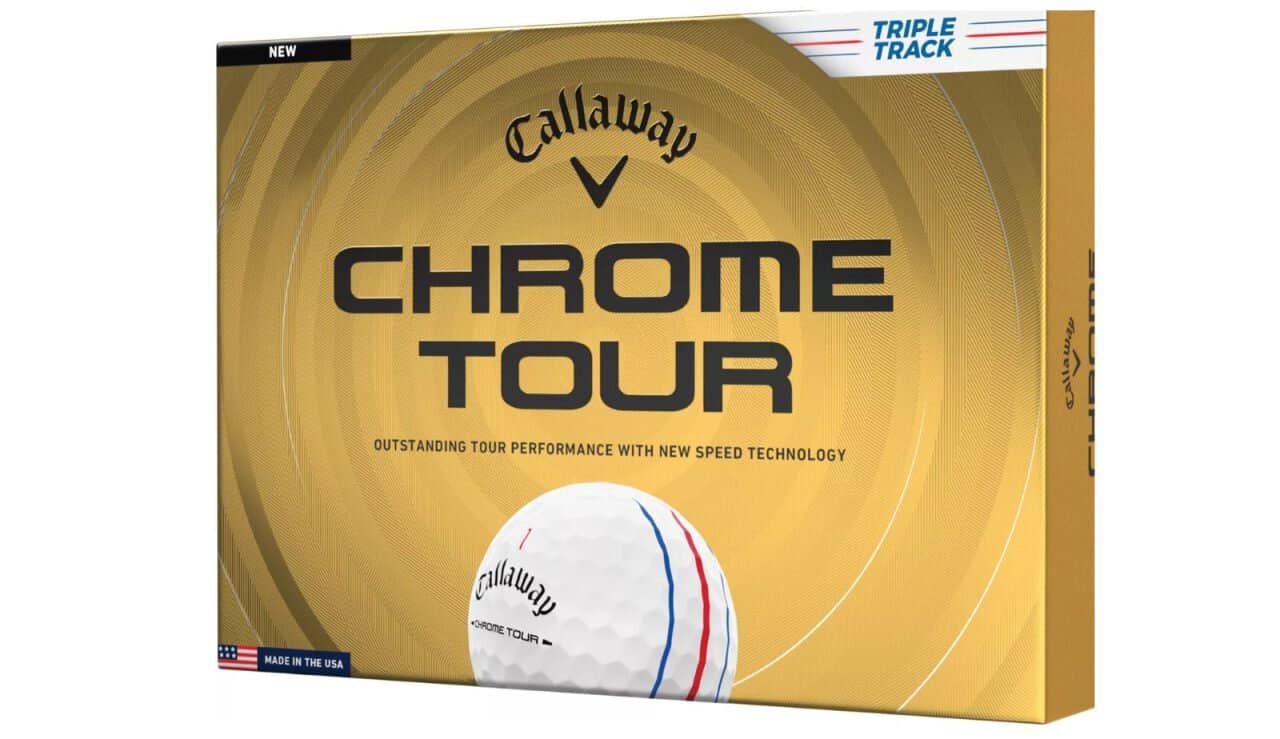
3. Callaway Chrome Tour
The low handicap pick
Read More ↓
The ball you play should depend on your handicap, not the pro that uses it. The way I categorize handicap is:
- High handicap shoots 90+
- Mid handicap shoots 80’s
- Low handicap shoots 70’s
If that’s all you were looking for, great. If you want to learn more about the differences and why they’re recommended for different golfers, continue reading.
The Current State Of Callaway Golf Balls
Callaway has been one of the most popular brands in golf for quite a while, both with pros and amateurs. As of now, they’re the 2nd most popular ball brand you’d find on tour, between Titleist and Srixon.
The Chrome Tour and Chrome Tour X are the 4th and 5th most used ball on tour. This shows that they probably make something good enough for you.
Here is the current list of Callaway balls that are available:
- Callaway Warbird (wouldn’t recommend)
- Callaway Superfast (wouldn’t recommend)
- Callaway Supersoft
- Callaway ERC Soft
- Callaway Chrome Soft
- Callaway Chrome Tour
- Callaway Chrome Tour X
- Callaway Chrome Tour Triple Diamond
The Chrome series is their high-end model. The Warbird and Super series are their entry-level balls. The ERC Soft is somewhere in the middle.
But just because the Chrome balls are more expensive and used on tour doesn’t mean they’re the best choice for everyone. It’s likely the worst choice for most people.
Before we get into each ball and who it’s designed for, let’s quickly talk about how the balls are different and why some of them are more expensive.
Compression
The compression rating of Callaway balls is between 50-100, depending on the model. We have an updated database on compression ratings, which you can see HERE.
Compression is how much force it takes to fully compress the ball. A low number means it’s softer and will compress more. A high number will take more force (speed) to compress.
You might have heard people say that soft balls are for slow swing speeds. This is generally true for distance and how the ball feels.
For people shooting in the 90’s and 100’s (or people who have a slower swing), a softer ball will likely feel better and give better performance. For faster swings (and better golfers), something firmer will give you more distance.
With the Callaway lineup, the Supersoft is the softest option. The balls that have “X” or Triple Diamond in the name are the firmer feeling models.
Cover
Callaway balls (and other brands) normally use one of two types of covers, urethane or ionomer. Cheaper balls will use an ionomer cover. Expensive balls will use a urethane cover.
The one you go with will depend on what you’re looking for, but each has its pros and cons.
Ionomer is a cheaper and firmer material, which is good for durability and less spin. Urethane is more expensive and softer, and will spin more. The advantage of spin is getting the ball to bite the greens. The downside is more side-to-side spin.
With Callaway, the Chrome series all have a urethane cover. The other balls use an ionomer or “hybrid” cover. Learn more about the types of covers HERE.
Layers
Callaway balls have between 2 and 4 layers, which again, has its pros and cons. Cheaper balls made for average players usually have a 2 piece design. Tour balls will have a 3 or 4 piece design.
As a general rule, 2 piece balls will spin less than 3-5 piece balls. Adding layers will help to optimize spin off the driver, especially at high speeds. It can also add height to your longer clubs.
With Callaway, the entry-level balls are 2 piece and the tour balls are 4 piece. They have a couple of options in the middle for anyone who wants a bit more spin at a lower price.
Callaway Golf Balls Comparison
Callaway Supersoft
| Handicap | High |
| Layers | 2 |
| Compression | 50 |
| Cover | Ionomer Blend |
| Feel | Soft |
| Driver Spin | Low |
| Wedge Spin | Low |
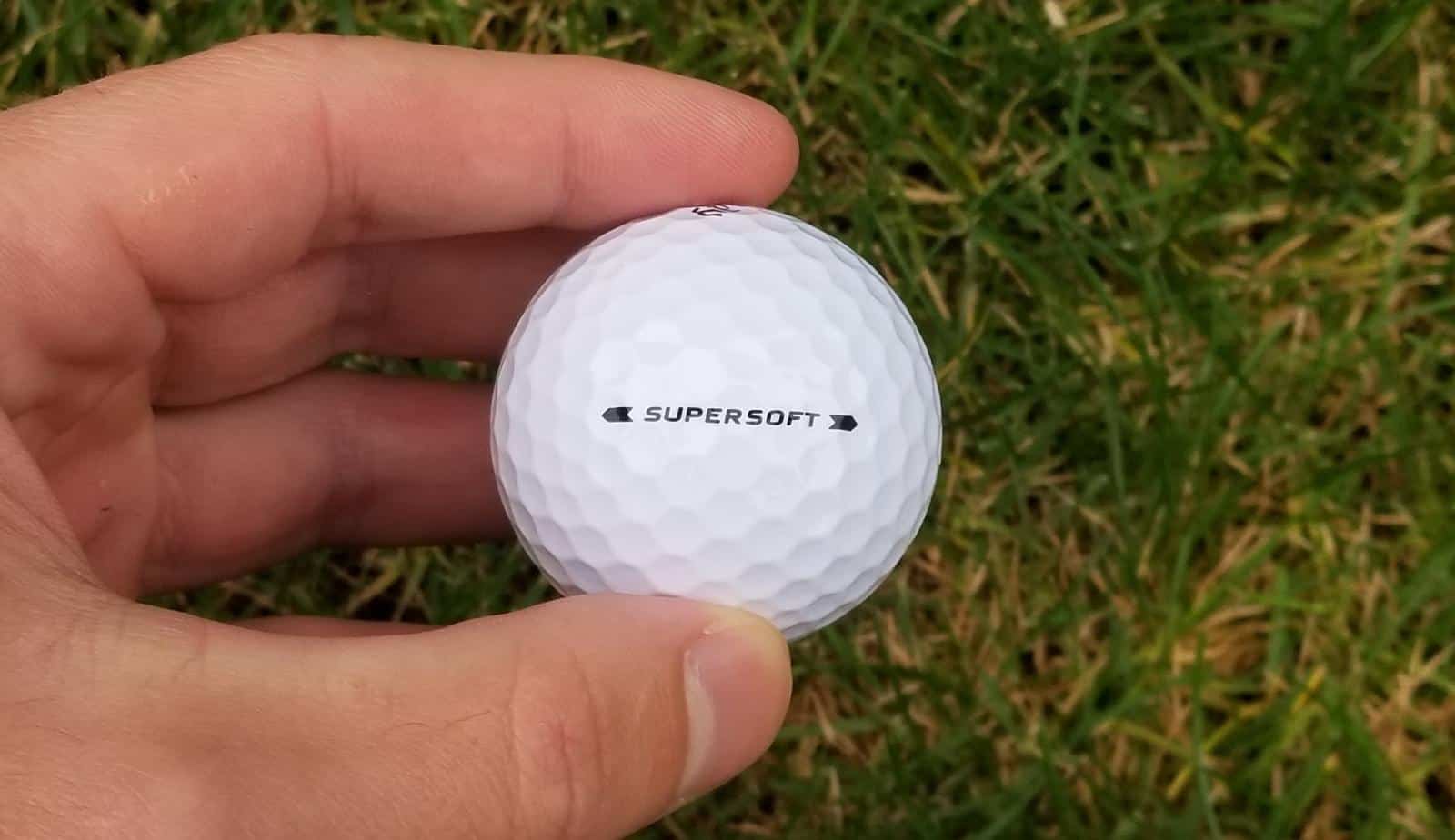
This is the main entry-level ball from Callaway and is also the softest one they offer. The Supersoft has been out for 10+ years and is always one of the best-selling balls on the market.
It’s a 2 piece ball that uses a hybrid cover (ionomer blend). The compression rating is around 50, which is considered a pretty soft golf ball. This makes it ideal for slow-to-average swing speeds (under 95 MPH).
The first thing I like about this ball is the price. It’s not the cheapest ball on the market, but losing 1-3 (or 5) per round doesn’t hurt too much.
The main benefit is the forgiveness. This is the lowest-spinning ball Callaway offers, by far. Low spin means straighter drives, which the average person could really benefit from.
In saying that, the lack of spin could also be considered a drawback. If you expect to chip this ball on the green, have it bounce once or twice, and then stop, you should look elsewhere. I really don’t think high handicappers should worry about this though.
Callaway ERC Soft

| Handicap | Mid |
| Layers | 3 |
| Compression | 77 |
| Cover | Ionomer Blend |
| Feel | Mid |
| Driver Spin | Low-Mid |
| Wedge Spin | Low |
I wouldn’t call this an entry-level ball. I also wouldn’t call it a tour-value ball. It’s pretty much a firmer feeling Supersoft that’s geared towards distance.
It’s a 3 piece ball that has a compression rating of around 77. It has the same ionomer blend cover that the Supersoft uses.
The extra layer adds a bit of spin to the ball, so you’ll get higher spins rates off the driver and irons (not really with wedges). The higher compression rating will also help with distance off the tee.
With the higher price tag , I wouldn’t recommend this to a beginner or high handicapper. I think you’d want to look at this ball once you can consistently shoot in the 80’s.
Callaway Chrome Soft

| Handicap | Low |
| Layers | 3 |
| Compression | 77 |
| Cover | Urethane |
| Feel | Soft |
| Driver Spin | Mid |
| Wedge Spin | Mid |
The Chrome Soft is Callaway’s softest tour ball and is the one to consider if you’re a low-mid handicapper with an average swing speed (under 100 MPH).
It’s a 3 piece ball with a urethane cover. The compression rating is around 77, which makes it a mid compression ball (good for a wide range of people).
If you look on tour, you won’t find these in any bags. The reason is that they’re a bit too soft, but chances are, you don’t swing the club as fast as the pros.
As a mid handicapper with a slightly above average swing speed, I like how these balls feel. I find them to be the most forgiving ball in the Chrome lineup. Plus, they perform really well around the green.
The main knock I have against them is that they aren’t the cheapest option out there. The specs are similar to other “tour-value” balls (Wilson Triad, Taylormade Tour Response), but they’re priced like a tour ball.
Callaway Chrome Tour
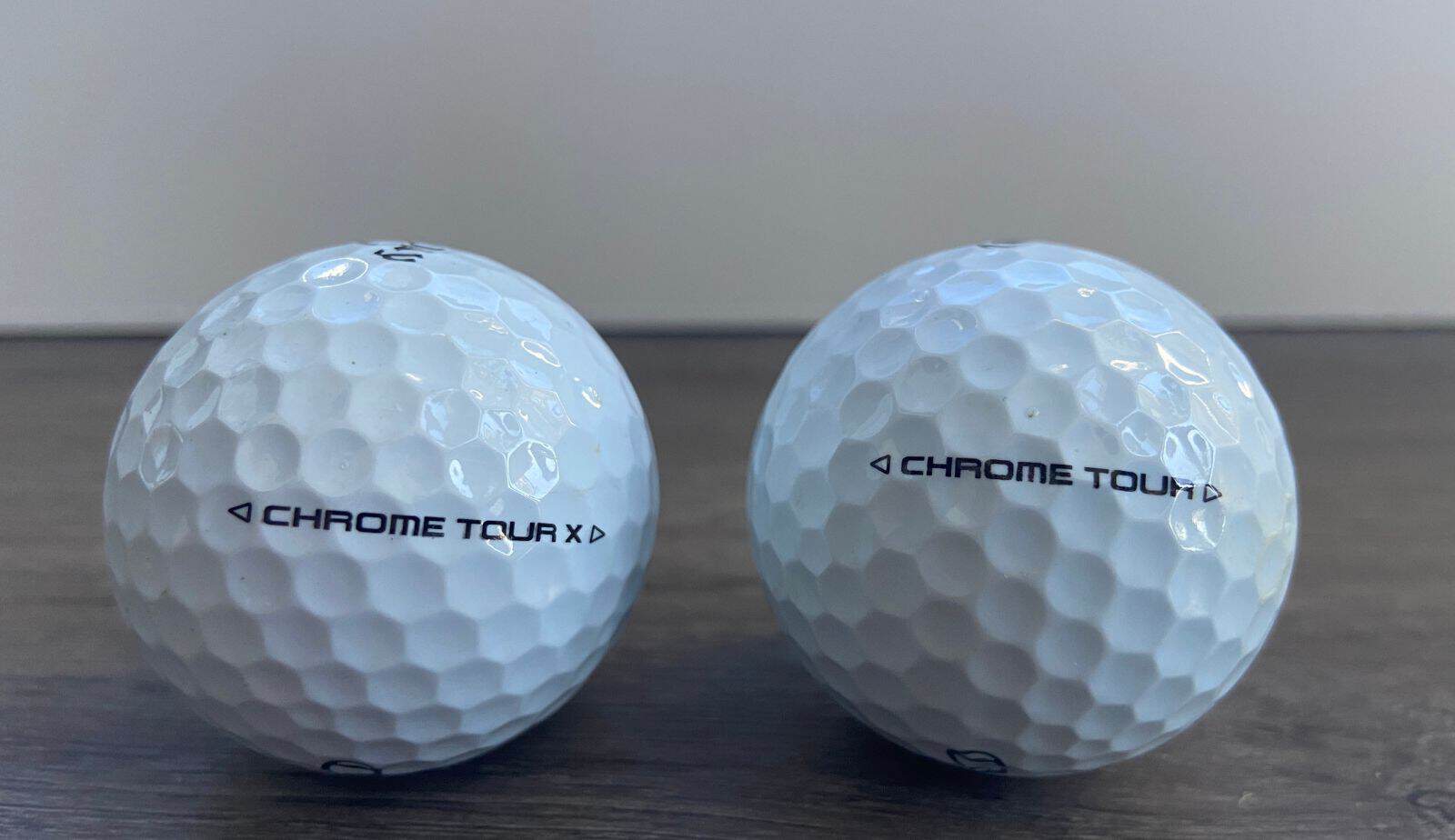
| Chrome Tour | Chrome Tour Triple Diamond | Chrome Tour X | |
|---|---|---|---|
| Handicap | Low | Low | Low |
| Layers | 4 | 4 | 4 |
| Compression | 90 | 100 | 100 |
| Cover | Urethane | Urethane | Urethane |
| Feel | Mid | Firm | Firm |
| Driver Spin | Mid | Mid- | Mid-High |
| Wedge Spin | Higher | High | Higher |
These are Callaway’s tour-level balls and are what you’d want to consider if you’re a low handicapper with a faster swing speed.
They’re all 4 piece balls with a urethane cover. The compression rating on the standard Chrome Tour is 90. The other 2 balls have a compression rating around 100.
On the PGA Tour, the the Chrome Tour and CTX are the #4 and #5 most used ball. The one you play will depend on what area you need help in.
The standard Chrome Tour is an all-around solid ball that gives low spin off the driver, high spin off the wedges, and a softer feel.
If you need a bit more spin tee-to-green, the Chrome Tour X is what you should use. If you need some extra distance, the Triple Diamond could be the way to go.
What Callaway Ball Should You Buy?
When trying to decide on the right Callaway ball to use, the most important things are your current skill level and how much you want to spend.
In my opinion, someone shooting 108 probably shouldn’t use the same ball as someone shooting 68. Their games are completely different and they need different things, which is why different models exist.
As the spin rates increase, so does the price. Average golfers shouldn’t spend a bunch of money on balls because they’ll lose 4-5 per round. Once you get better, you can pay for better performance.
Other things you might want to consider are swing speed, ball flight, and how the ball feels. Let’s dive into the details, but generally, they make balls that fit into three categories: low, mid, and high handicap.
1. The high handicap pick: Callaway Supersoft
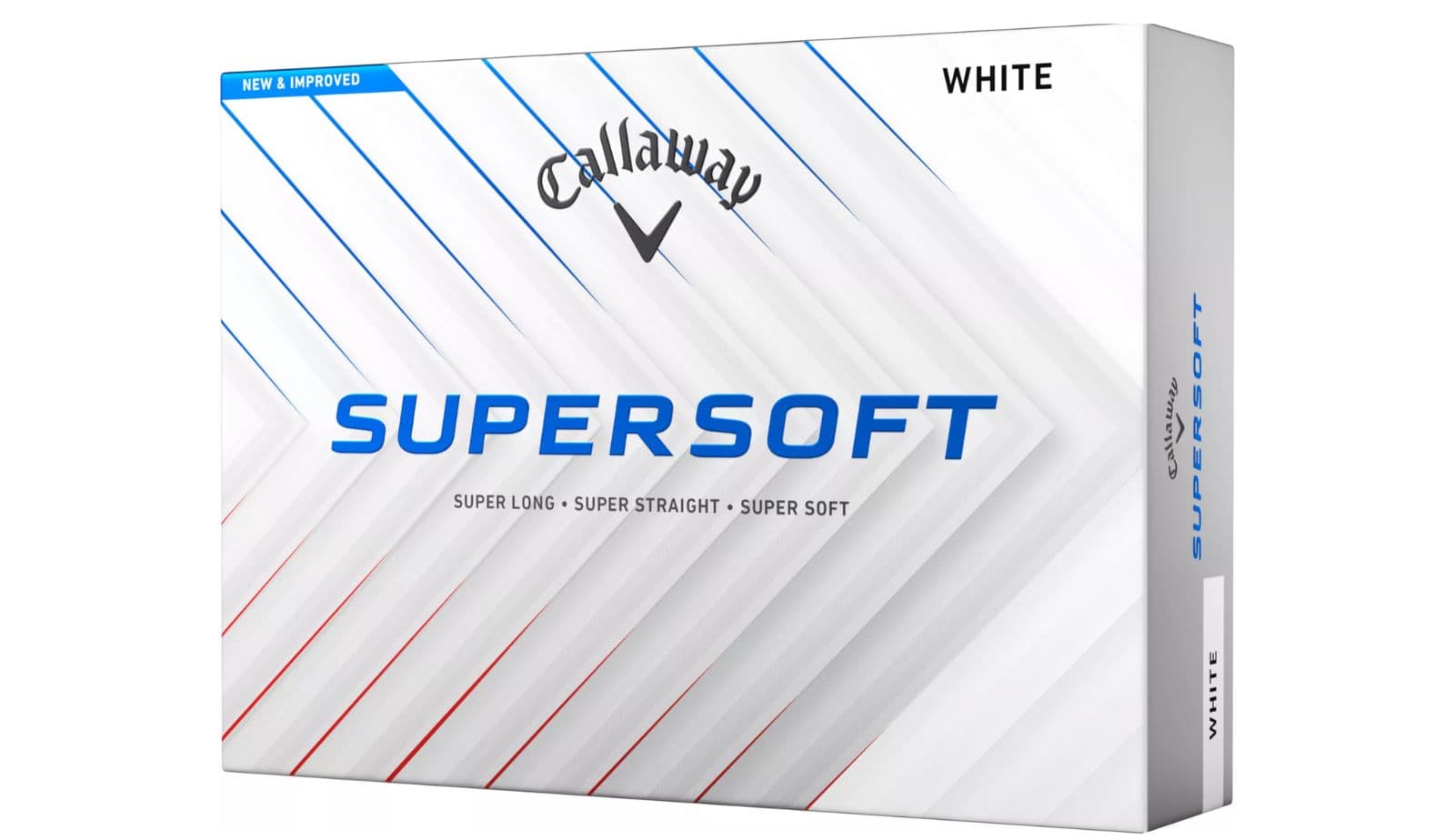
The best entry-level ball from Callaway is the Supersoft. It’s been around for a number of years and is always one of the best-selling balls on the market.
In my experience, this is the best option for high handicappers (anyone shooting 90+). At this point, you need a cheaper ball that flies long and straight.
For high handicaps, the ball I’d absolutely avoid is one of the Chrome balls. They’ll cost you a lot more money and they won’t benefit your game in any way.
If anything, they’ll actually hurt your game. I don’t know about you, but it feels like anytime I use an expensive ball I end up losing it. Then I’ll find a cheap ball in the bushes and it’ll last the next 2 rounds.
This leaves the Supersoft and ERC Soft (don’t even consider the Warbird, it sucks).
Compared to the ERC Soft, the Supersoft has similar spin rates with the mid irons and wedges. The distances with the mid irons are also very similar. The ERC Soft will spin more with the driver and is also a couple of yards longer.
I don’t think the higher spinning ERC would benefit your game in any way to justify the higher price. Focus on greens and fairways at this point.
Callaway Supersoft
Check Amazon PriceOur ReviewWe earn a commission if you click this link and make a purchase, at no additional cost to you. This does not impact our review.
2. The mid handicap pick: Callaway Chrome Soft
Until you’re able to consistently shoot in the 80’s, I wouldn’t think about upgrading balls. At this point, you don’t need as much forgiveness and something more expenive could help you around the greens.
The Chrome Soft is part of their premium lineup, but it’s too soft to be used on tour. That said, you probably don’t swing as fast as the pros, so it could be a good fit.
As a mid handicapper myself, this is the ball I’d use. I find the other Chrome balls too firm. I also find this ball to be a bit straighter, which is still a big benefit.
The other ball you could consider at this point is the ERC Soft (cheaper). In my experience, both balls fly a similar distance. That said, the Chrome Soft is the clear winner when it comes to spin (tee-to-green).
Callaway Chrome Soft
Check Amazon PriceWe earn a commission if you click this link and make a purchase, at no additional cost to you. This does not impact our review.
3. The low handicap pick: Callaway Chrome Tour
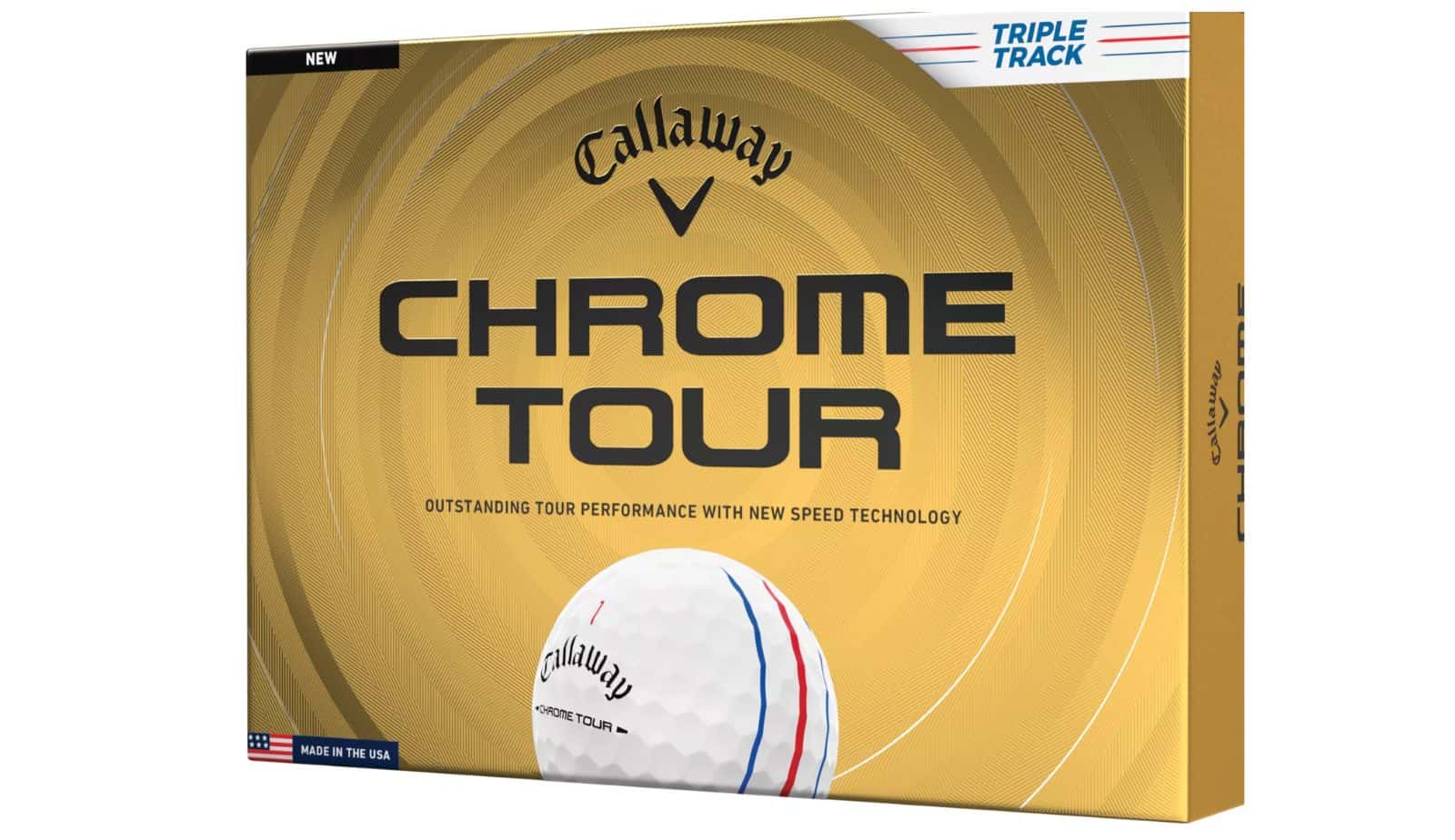
If you take away the price, the best and most balanced ball from Callaway is the Chrome Tour. It’s the 4th most used ball on tour, and if you shoot in the 70’s, is the one you should try first.
One thing I will say is that you could still use the Chrome Soft at this point. Both are premium balls, with the CS being quite a bit softer. I’d still consider the CS if you have a slower swing speed (under 100 MPH).
If your swing speed is 100+ MPH, you’ll likely get more distance out of the Chrome Tour. Not only that, but I feel like it performs better around the greens.
I’d say it’s a better feeling Chrome Soft X LS that spins more around the green.
For me, the Chrome Tour X and Diamond are too firm. It almost feels like you’re hitting a rock. You’ll probably feel the same unless you swing the driver 110+ MPH.
Callaway Chrome Tour
Check Amazon PriceWe earn a commission if you click this link and make a purchase, at no additional cost to you. This does not impact our review.
Conclusion
Hopefully you now know the differences between the Callaway balls and which one (or two) you should consider playing.
I’ve used all of them, both on and off the course. Obviously, you won’t get the exact same results as me, but I tried to point out the pros and cons of each.
The main thing I want to leave you is that you DO NOT need to spend a lot on balls. The average golfer will save money and most likely get better results with a cheaper ball.
If you have any questions that weren’t talked about in the article or you’d just like to share your experience, make sure to leave a comment below.
And if you want to learn more about other brands, check out one of these guides:
