

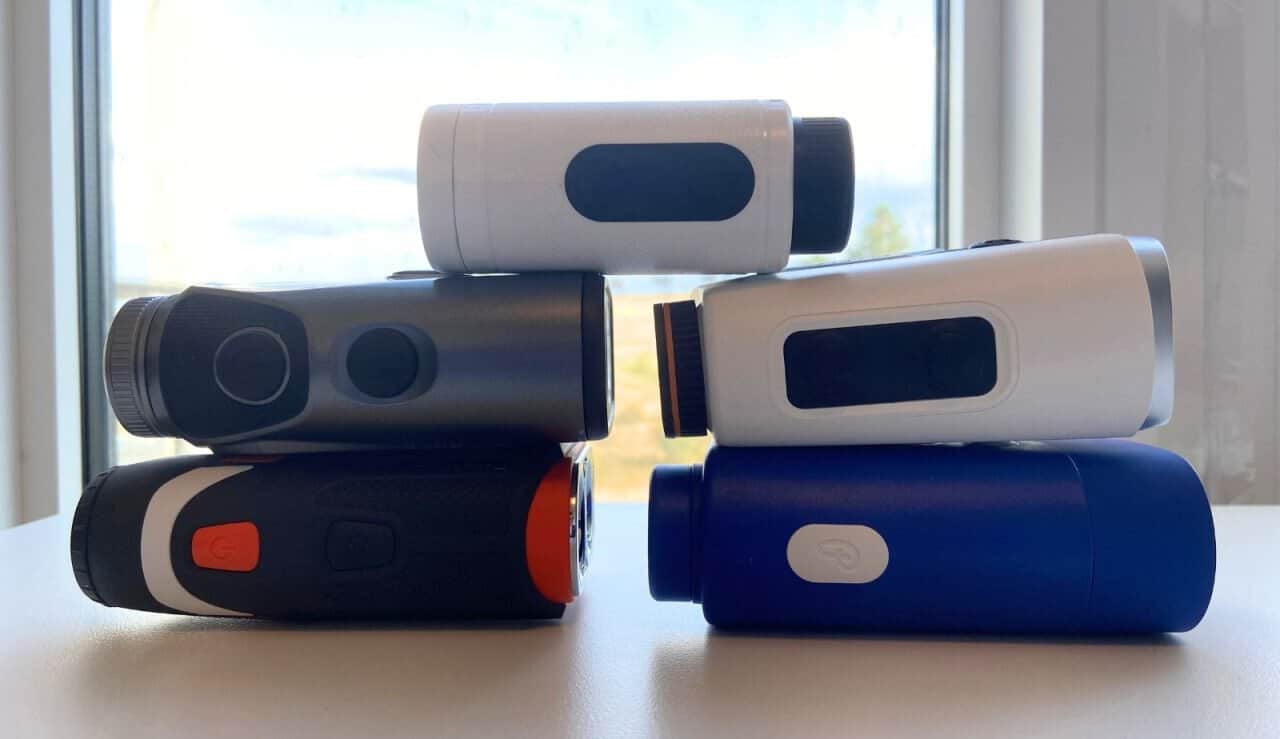
When it comes to picking a rangefinder, there is a huge list to pick from. Not only that, but you also have a huge range of prices. Should you get a $100 unit or a $500 unit? What’s even the difference?
I’ve used a lot of different rangefinders over the years. I’ve used cheap Amazon ones and I’ve used premium Bushnell ones. Some have been great, some were great (until they weren’t), and some have been just fine.
Below I’m going to list my favorite rangefinders. I’m not going to be like every other website out there and list 17 different options. It’s not helpful, if anything, it’s more confusing.
I’m going to list my 3 favorites, each at a different price point. You don’t need to spend a fortune to get a solid device. Most units are just as accurate, so the main differences are quality, ease of use, and brightness.
I’ve used each of these for 10+ rounds of golf, so I’m confident in recommending them. I’ll also continue to update this post as I try new units.
An Overview: Our Favorite Rangefinders
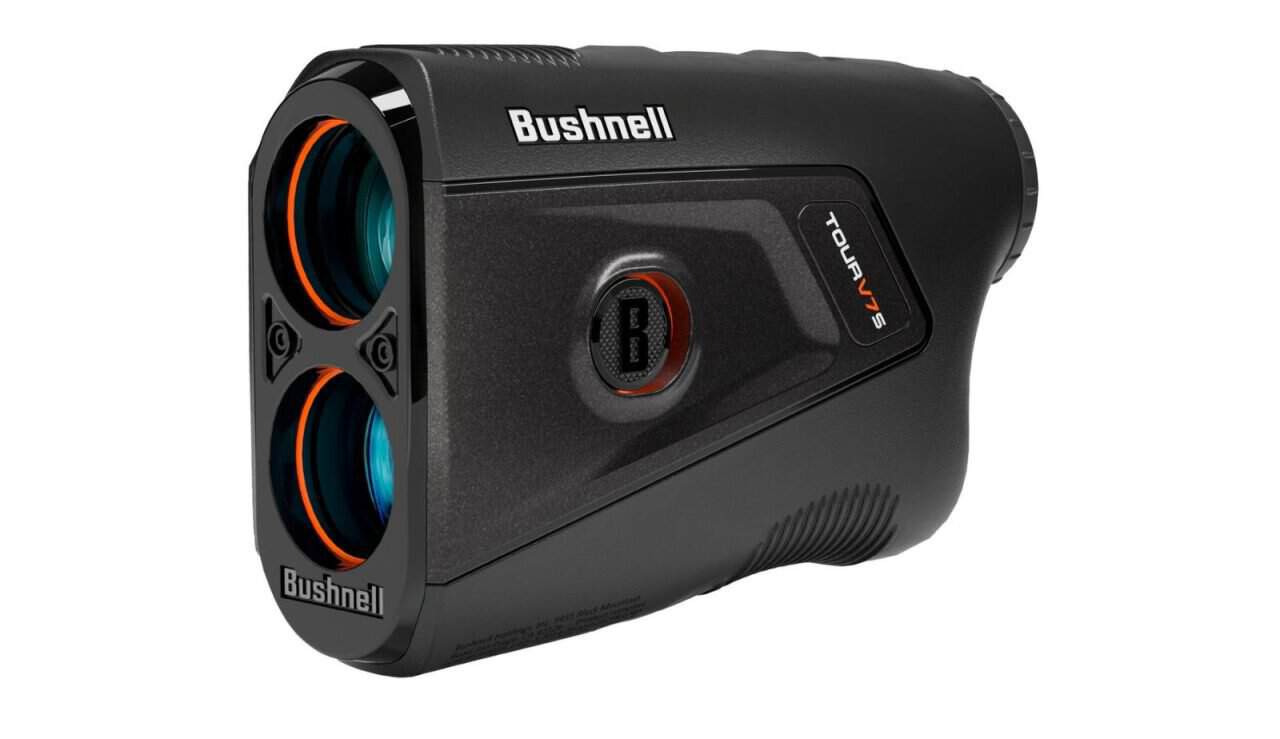
1. Bushnell Tour V7 Shift
The high-end pick
Read More ↓
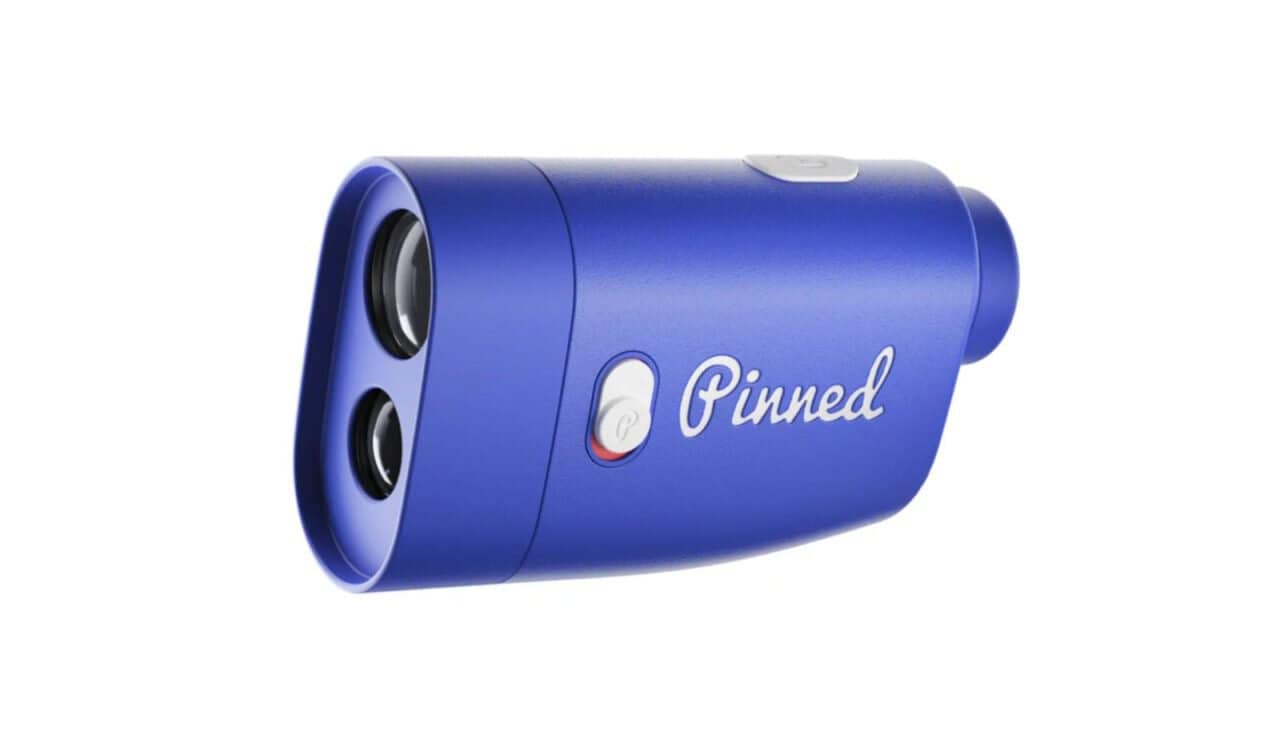
2. Pinned Prism+
My pick
Read More ↓
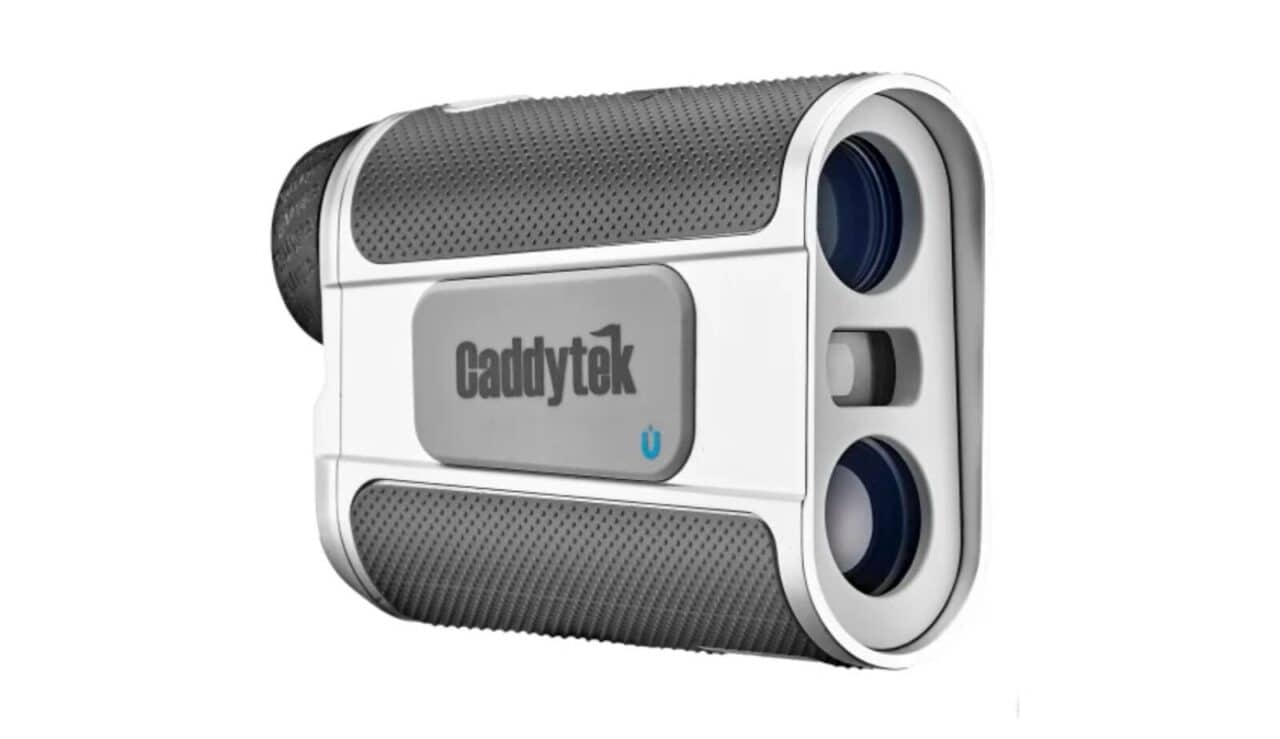
3. Caddytek CaddyView V3
The budget pick
Read More ↓
Our High-End Pick: Bushnell Tour V7 Shift
Bushnell has been the leader in golf rangefinders for quite a while. Pretty much every golfer knows the brand and you’d have a tough time finding someone who has a bad thing to say about it.
I own the previous version, the Bushnell V6 Shift, and while it’s a really good unit, there are a couple of things that could be better. The V7 is a clear improvement.
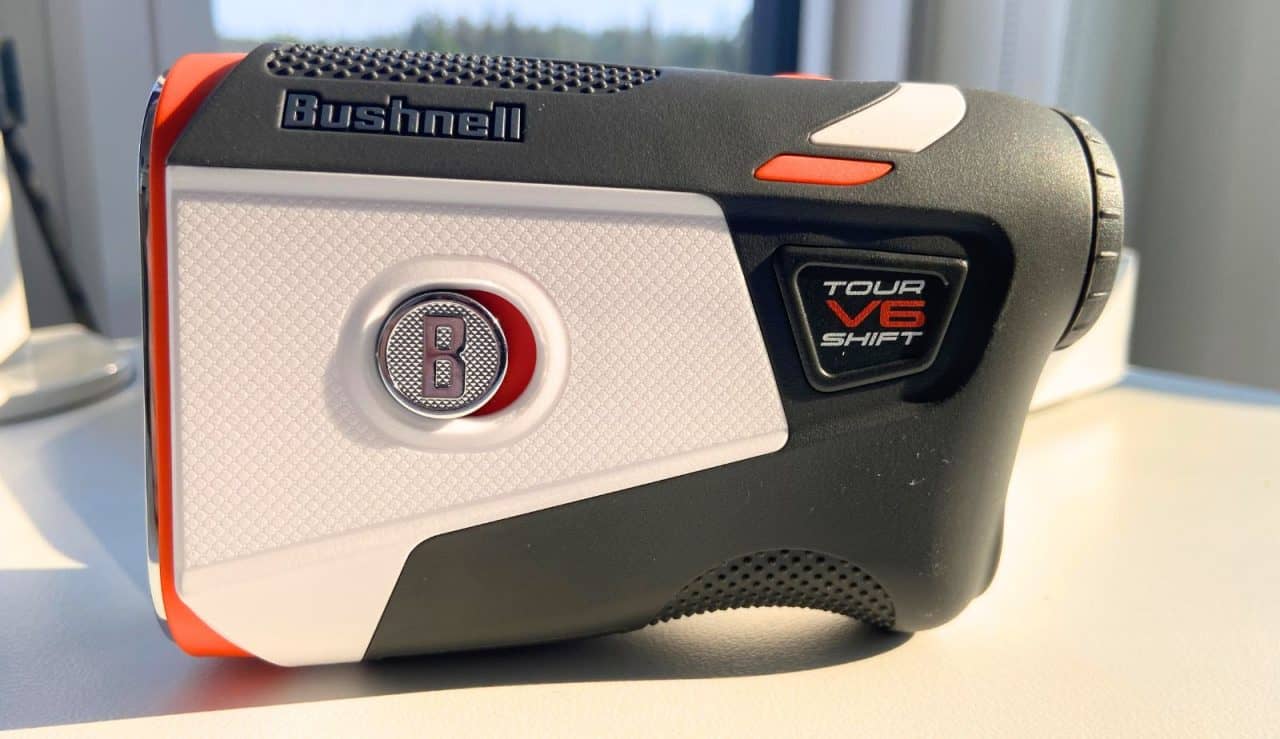
The main difference being the dual color-display on the V7. The V6 was great 95% of the time, but there were some situations when it was tough to read the black numbers.
The V7 gives you the option to use black or red numbers. The red will be a lot brighter and will be much easier to see in darker conditions.
The V6 and V7 currently sell for a similar price, which makes the V7 a no-brainer. If you can find the V6 for $100 less than the V7, I might lean in that direction.
There are other Bushnell rangefinders that are more expensive and offer more features, but I don’t think it’s worth the extra money. It could be for you, but it isn’t for me.
Overall, the V7 Shift is a pretty expensive device, but the accuracy, durability, and ease of use is pretty tough to beat. It’s an awesome choice if you want to pay up for something that’ll last a long time.
Bushnell Tour V7 Shift
Get 10% off your first PlayBetter order
See Amazon PriceSee PlayBetter PriceWe earn a commission if you click this link and make a purchase, at no additional cost to you. This does not impact our review.
My Pick: Pinned Golf Prism+
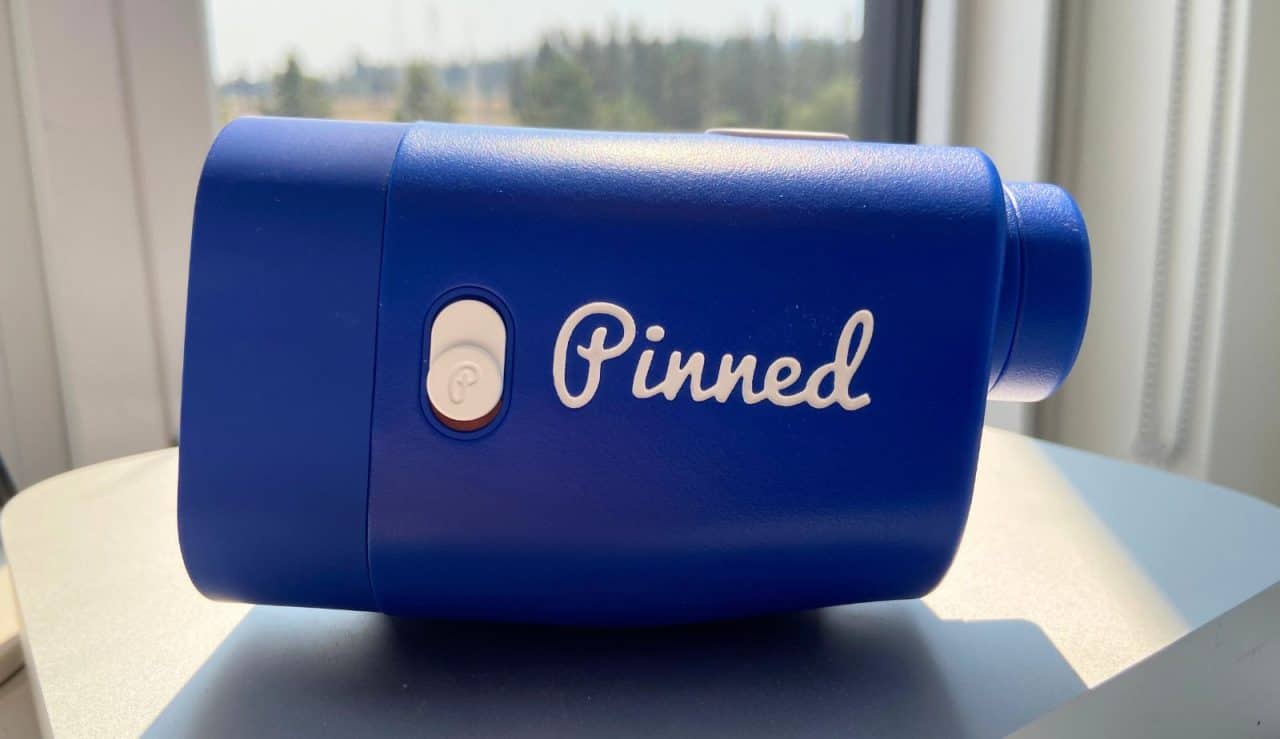
If you want a really good rangefinder but don’t want to pay Bushnell prices, this is a great choice. It’s currently my favorite rangefinder and is what I have in my bag.
The main reason I like it is because it’s cheaper. The other reason is that it has a color-display, so the red numbers are easier to see compared to my Bushnell V6.
I even asked my wife and she said the Pinned was easier to use. The main reason is the 7x magnification vs the 6x on the Bushnell, which makes the target look bigger.
The main downside (can’t confirm or deny this yet) is that Pinned Golf doesn’t have the long-term durability record that Bushnell does.
All that means is that I don’t know if it’ll still be working 2, 5, or 10 years from now. If I got a Bushnell, I’d be pretty confident.
That said, I’m going to be using the Prism a lot and will update this post and my full review if anything happens. As of now, it’s been awesome.
Pinned Golf Prism+
Get 10% off your first PlayBetter order
See Amazon PriceSee PlayBetter PriceWe earn a commission if you click this link and make a purchase, at no additional cost to you. This does not impact our review.
The Budget Pick: CaddyTek V3

I’ve owned quite a few of the $100 or less rangefinders you’ll find on Amazon. Most of them are just as accurate as my Pinned and Bushnell units. The only problem is that a lot of them have stopped working or became unaccurate over time.
This is the reason I’d recommend paying a little bit more and getting the Caddytek.
The reason is that it’s sold at Costco, who have one of the best return policies out there. If anything goes wrong you can just bring it back and get a new one (even after the warranty expires).
Compared to the more expensive units I recommended above, the Caddytek will be just as accurate. What’s usually a bit worse (compared to more expensive units) is the the brightness of the optics and how easy it is to lock-on flags.
The V3 goes on sale quite often for somewhere around $100 bucks, which makes it a steal. You’ll get 90% of the features for less than half the price.
An alternative: For slightly cheaper, I’ve heard good things about the Redtiger rangefinder on Amazon. A buddy of mine has used it for a few years and it’s been pretty solid. It often goes on sale for under $100.
CaddyTek V3
Buy HereWe earn a commission if you click this link and make a purchase, at no additional cost to you. This does not impact our review.
What To Look For In A Rangefinder
When it comes to rangefinders in general, you have a few key differences that you need to think about. Some will offer more than others, but not everyone needs those extra features.
Let’s talk about what you need to consider.
Accuracy
This is the most important thing, by far. A rangefinders job is to give you the distance to a target, so if it’s not accurate (even by a small amount), is there really a point in having one?
In my experience, all the rangefinders I’ve tested have been accurate. It doesn’t matter if it’s a $50 Amazon unit or a $500 top-of-the-line one.
The issue comes with how accurate they stay over time. I’ve had 2 budget units that started out accurate, but they became unaccurate over time.
This wasn’t the case with all the budget rangefinders, but it’s important to check the accuracy often to make sure it’s still right.
Display
Some rangefinders use a color-display and some use a black-display. All this means is that the yardage numbers show up as black or red/green.
It’s not a huge deal, but having a color-display will be a bit easier to see when it’s darker out. The red/green numbers will be a lot brighter, which could help if you have poor eyesight.
95% of the time, black will be fine.
Ease Of Use
Some rangefinders are easier to use than others. This is usually the case for more expensive units compared to the cheaper ones.
More expensive rangefinders will usually lock-onto the flag quicker than cheaper ones. It might take 1-2 tries compared to 4-5 with a budget unit.
Obviously, it’ll depend on how familiar you are with the unit. With practice, you’ll be able to hit the target quicker.
More expensive units usually have brighter optics as well, which makes the picture clearer. This can make it a bit easier to see (and hit) the target.
You’ll also have the choice between 6x and 7x magnification. 7x mag will be more zoomed in, which means the target will be bigger. 6x mag will be less zoomed in, which will give you a wider field of view and a slightly more stable view.
Slope
The final thing to consider is whether or not you need slope. If you don’t know, slope will give you a yardage number that takes into account elevation.
If you’re 150 yards out and are shooting uphill, it might play somewhere closer to 160 yards. If you’re 150 yards out and are shooting downhill, it might play closer to 140 yards.
A rangefinder with slope will give you the adjusted number. Most rangefinders come with slope, so it’s probably recommended to get one with it.
Just keep in mind that if you’re playing tournaments, slope isn’t allowed. You can easily switch it off for tournament play though.
Rangefinder, Golf App, or GPS?
A rangefinder is one of a few ways to get yardages on the course. You could also use a GPS unit (handheld or watch) or you could use a golf app on your phone.
The benefit to using a rangefinder is that it’ll give you the most accurate numbers. The downsides are that you might hit the wrong target, you might not be able to see the green, or you might have shaky hands.
With GPS, I like that you get the distance to the front, middle, and back of the green. I find that having a range to hit between makes things a lot easier, especially for higher handicaps. Some apps are also free, which is pretty cool.
You can learn more about rangefinders vs GPS units HERE. You can also read our articles on the best GPS for golf as well as the best golf apps.
Let’s hear from you – Have you used any of the rangefinders we talked about? Do you have any others that you like more? Let us know in the comments below.
